
3PE Coated Spiral Steel Pipe
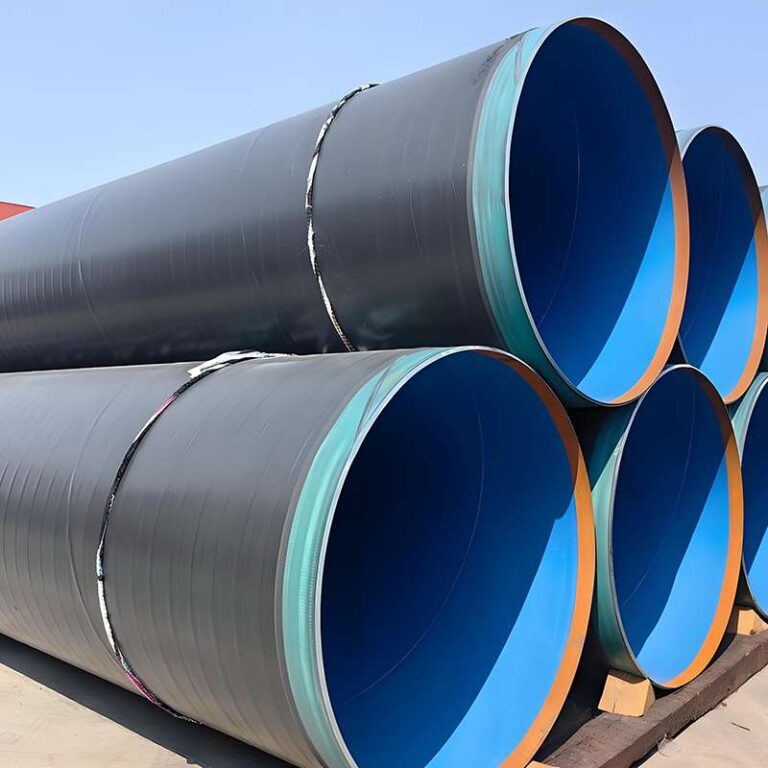
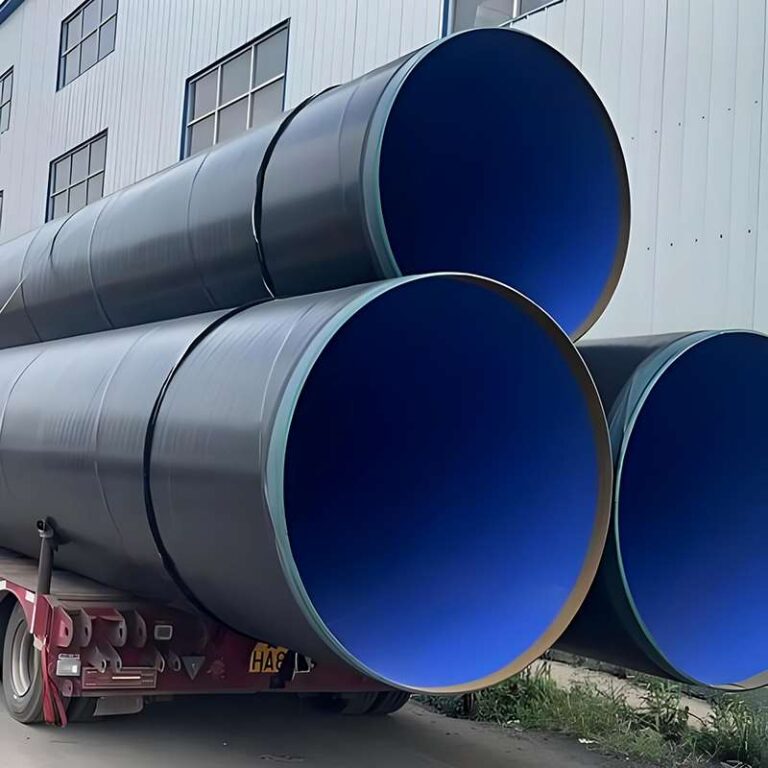
I. What is 3PE Coated Spiral Steel Pipe?
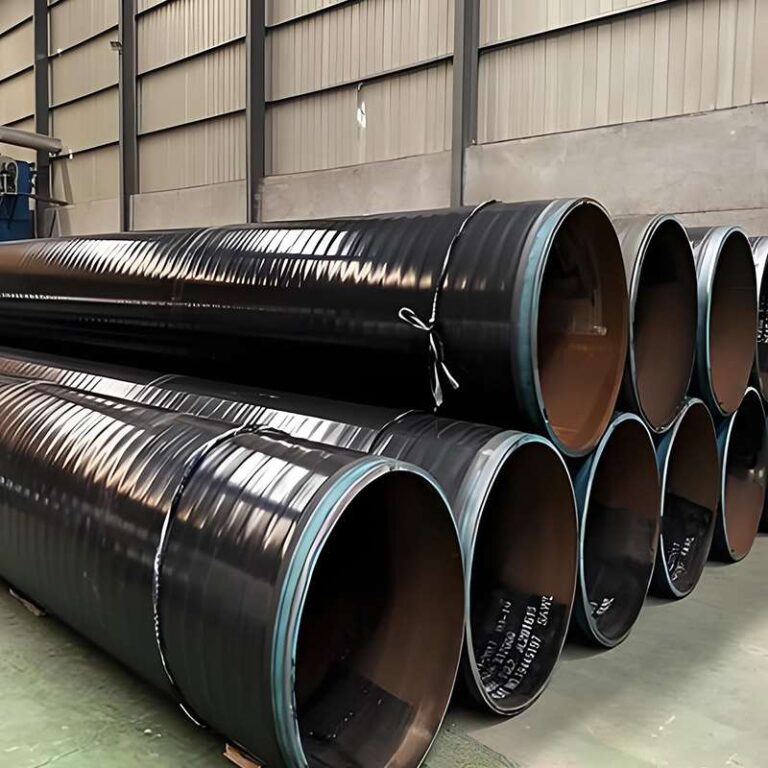
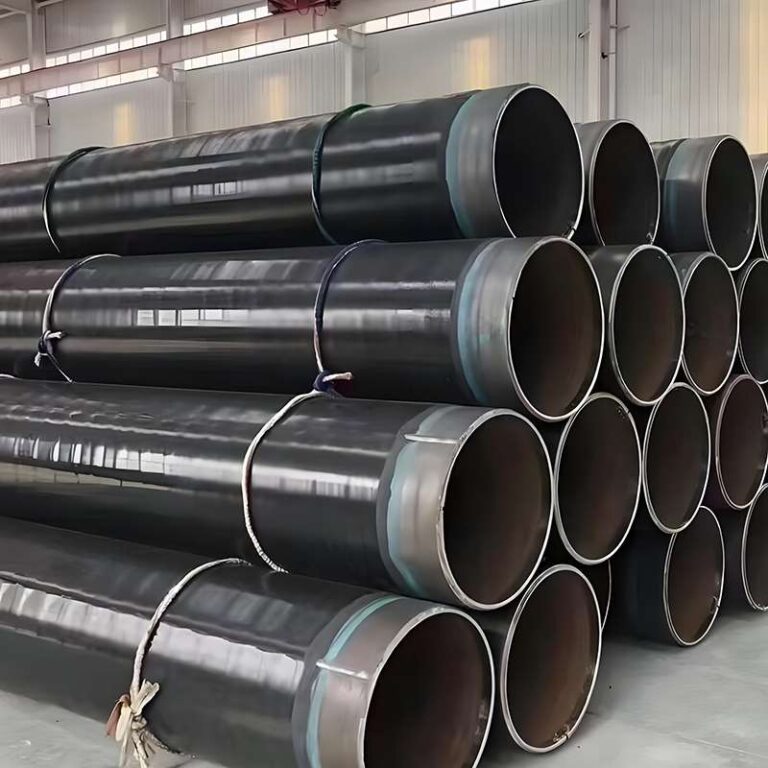
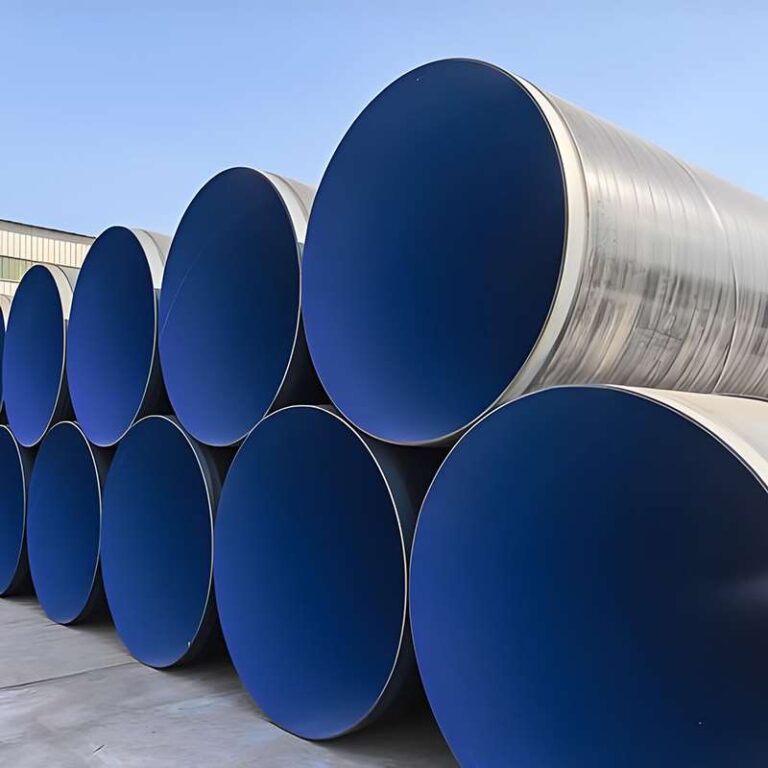
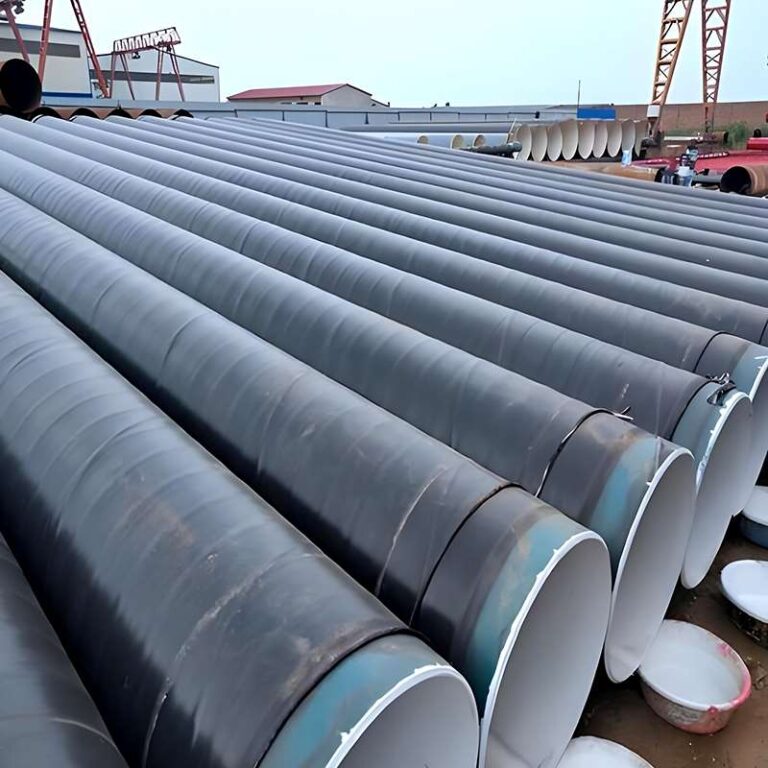
A 3PE Coated Spiral Steel Pipe is a high-strength welded steel pipe protected by an advanced 3-layer polyethylene (3PE) anti-corrosion coating. This specialized coating combines an epoxy primer, a copolymer adhesive, and a heavy-duty polyethylene outer layer to provide ultimate resistance against rust, moisture, and soil stress.
With a service life of up to 50 years, it is the industry standard for long-distance underground pipelines transporting oil, gas, and water.
II. The 3 Layers of 3PE Coating (From Inside to Outside)
Layer 1: Fusion Bonded Epoxy (FBE) — The “Rust Shield”
How it works: This layer bonds directly to the steel surface like a super-strong primer. By locking tightly onto the metal, it completely blocks out moisture and air, stopping rust before it can even start.
Layer 2: Copolymer Adhesive (AD) — The “Super Glue”
How it works: Think of this as an industrial-grade, double-sided tape. Because the inner epoxy and outer plastic wouldn’t naturally stick together, this middle layer fuses them into one single, inseparable piece.
Layer 3: Polyethylene Outer Shell (PE) — The “Heavy-Duty Armor”
How it works: This thick, tough outer plastic shell provides ultimate physical protection. As pipes are transported and buried underground, this layer absorbs all impacts from rocks and soil stress while remaining 100% waterproof.
III. Main features of 3PE coated spiral steel pipe
| Item | Key Feature | Description |
|---|---|---|
| Anti-Corrosion Structure | Three-Layer Composite Protection | FBE epoxy primer + adhesive layer + HDPE outer layer, forming a complete anti-corrosion system |
| Corrosion Resistance | Excellent | Resistant to soil, water, salt spray, and various chemical media |
| Service Life | Long | Typically 30–50 years, suitable for long-term buried pipelines |
| Mechanical Performance | Impact & Wear Resistant | Outer PE layer provides strong mechanical protection, suitable for complex construction environments |
| Pipe Structure | Spiral Welded | Suitable for large-diameter pipelines, high strength, flexible production, and lower cost |
| Installation | Easy to Install | Moderate weight, convenient for transportation and on-site construction |
| Application Range | Wide | Used in oil, natural gas, water supply, chemical and other long-distance or buried pipelines |
| Maintenance | Low | Coating is stable, requiring minimal maintenance |
IV. 3PE Anti-Corrosion Spiral Steel Pipe Manufacturing Process
Steel Plate Preparation → Spiral Forming → Submerged Arc Welding (SAW) → Weld Seam & Full Pipe Inspection → Surface Blasting (Sandblasting) → 3PE Coating Application → Cooling & Curing → End Finishing & Inspection → Final Marking & Packaging
V. 3PE Coated Spiral Steel Pipe?– Export Standards
| Category | Standard | Application |
|---|---|---|
| Line Pipe Standard | API 5L (PSL1 / PSL2) | Most widely used international standard for oil & gas pipelines |
| Line Pipe Standard | ISO 3183 | International equivalent of API 5L for pipeline steel pipes |
| Steel Pipe Manufacturing | ASTM A252 | Structural steel pipe standard (pile & foundation use) |
| Steel Pipe Manufacturing | ASTM A53 | General purpose welded and seamless steel pipe |
| Welding Standard | API 1104 | Welding of pipelines and related facilities |
| Anti-Corrosion Coating | DIN 30670 | Polyethylene coating system for steel pipes (3PE coating reference) |
| Anti-Corrosion Coating | CSA Z245.21 | External polyethylene coating for pipeline systems (Canada standard) |
| Coating Quality Control | ISO 21809-1 | External coating for buried or submerged pipelines (3PE system) |
| Inspection & Testing | NACE MR0175 / ISO 15156 | Materials for sour gas (H?S) environments |
| Hydrostatic Test | API 5L / ISO 3183 Requirements | Pressure testing for pipeline integrity |
VI. Main application areas of 3PE coated spiral steel pipe
| Application Area | Description |
|---|---|
| Oil & Natural Gas Pipelines | Used for long-distance transportation of crude oil, natural gas, and refined oil products, suitable for underground installation and complex terrains |
| Urban Water Supply & Drainage | Used for drinking water, industrial water, and drainage systems, ensuring long-term safe operation due to excellent corrosion resistance |
| Chemical Pipelines | Used for transporting acids, alkalis, saltwater, and other corrosive media, with 3PE coating providing strong chemical resistance |
| Offshore Pipelines | Suitable for nearshore and subsea pipelines, protecting against seawater corrosion and mechanical damage |
| Municipal Engineering | Applied in heating pipelines, gas pipelines, and urban infrastructure projects, extending service life |
| Industrial Transportation Pipelines | Used in chemical plants, refineries, and energy facilities, ensuring high strength and corrosion resistance for fluid transport |
VII. FAQ
1. What is the typical service life of 3PE coated spiral steel pipes?
Under normal buried conditions or standard operating environments, the designed service life of 3PE coated spiral steel pipes is typically over 30 years, and can reach up to approximately 50 years.
The service life mainly depends on three key factors:
- Soil corrosivity
- Construction and installation quality
- Thickness of the anti-corrosion coating system
For highly corrosive environments (such as saline-alkali soil or coastal areas), it is recommended to increase the anti-corrosion grade or apply a cathodic protection system to further extend service life.
2. What engineering projects are 3PE coated spiral steel pipes suitable for?
This type of steel pipe is widely used in various long-distance transmission and infrastructure projects, including:
- Oil and natural gas transmission pipelines
- Urban water supply and drainage systems
- Chemical media transportation pipelines
- District heating pipeline networks
- Cross-regional infrastructure projects
Due to its excellent anti-corrosion performance, it is particularly suitable for buried pipelines and complex environmental conditions.
3. What are the advantages of 3PE coating compared to conventional anti-corrosion systems?
Compared with traditional anti-corrosion methods (such as single-layer epoxy coating or paint-based systems), the 3PE coating structure offers significant advantages:
- Thicker coating with superior impact resistance
- A three-layer system (FBE + adhesive layer + PE outer layer) provides multi-level protection
- Strong resistance to soil stress and mechanical damage
- Significantly extended service life
4. Can 3PE coated spiral steel pipes be used in coastal or seawater environments?
Yes, they can be used; however, the design must be optimized according to the corrosion severity of the environment.
In coastal or marine areas, high salinity and humidity significantly accelerate corrosion. Therefore, it is typically recommended to:
- Increase the thickness of the anti-corrosion coating
- Apply a cathodic protection system
- Use higher-grade steel materials
These measures ensure long-term stable operation in marine environments.
5. What is the specification range of 3PE coated spiral steel pipes?
The specification range is broad and can be customized according to project requirements:
- Outer diameter: 219 mm – 3500 mm
- Wall thickness: 6 mm – 25 mm (or thicker upon request)
- Steel grades: Q235B, Q355B, API 5L Gr.B / X42 / X52 / X60, etc.
- Coating thickness: typically 2.0 mm – 4.0 mm (adjusted according to standards)
All specifications are generally custom-engineered based on project design requirements.
6. How to determine whether 3PE coated spiral steel pipes meet quality standards?
Quality can be evaluated from the following key aspects:
- Uniform coating without bubbles, peeling, or delamination
- Adhesion test results meeting required standards (non-peelable performance)
- Coating thickness complies with specification requirements
- Passed hydrostatic pressure and impact testing
- Availability of third-party inspection reports
High-quality products are typically delivered with a complete Mill Test Certificate (MTC) and certifications compliant with API / ISO standards.